In this article
ToggleIntroduction
Many people feel curious about witchcraft long before they ever begin practicing it.
Sometimes the interest appears slowly, through a fascination with the moon, a love for nature, or the quiet feeling that there is more to the world than what we usually notice.
Other times it arrives suddenly, sparked by a book, a conversation, or a moment that feels strangely meaningful.
If you’ve ever wondered how to start witchcraft, you’re not alone. It’s one of the most common questions beginners ask when they first begin exploring spiritual or magical practices.
The good news is that starting witchcraft is much simpler than many people expect.
You don’t need rare tools, secret knowledge, or years of study before you can begin. Witchcraft is not about perfection or elaborate rituals. At its heart, it’s about intention, awareness, and building a relationship with the world around you.
This guide will walk you through the basics so you can begin your path in a way that feels natural, grounded, and authentic.
What Witchcraft Really Is (and What It Isn’t)
One of the biggest obstacles for beginners is misunderstanding what witchcraft actually is.
Popular culture often portrays witches as mysterious figures performing dramatic spells or possessing unusual powers. While these images can be entertaining, they rarely reflect how modern witchcraft is actually practiced.
In reality, witchcraft is best understood as a personal spiritual practice centered around intention and awareness.
For many people, it involves:
- – connecting with nature
- – observing natural cycles
- – developing intuition
- – creating small rituals that bring focus and meaning to everyday life
Witchcraft is not necessarily a religion
One common misconception is that witchcraft always requires following a specific religious tradition.
In truth, many people practice witchcraft in a completely personal and non-religious way.
Some witches do follow spiritual traditions such as Wicca or other pagan paths, but many others simply use witchcraft as a framework for mindfulness, reflection, and connection with nature.
There is no single rule that determines how witchcraft must be practiced.
You don’t need to be “special”
Another myth is that only certain people can become witches, that it requires a rare gift or supernatural ability.
In reality, witchcraft is a practice, not a status.
Like meditation, yoga, or journaling, it’s something anyone can explore if they feel curious about it.
The most important qualities are attention, patience, and openness.
Witchcraft is about intention
At its core, witchcraft is the act of working with focused intention.
This might look like:
- – setting an intention before beginning the day
- – reflecting during the full moon
- – preparing tea as a small ritual of calm
- – spending time in nature with awareness
These practices may seem simple, but when done intentionally, they become meaningful acts that help shape your mindset and energy.
Why So Many People Feel Drawn to Witchcraft
Many beginners feel surprised by how strongly they are drawn to witchcraft. Often, the interest feels less like a random curiosity and more like something that has been quietly building over time.
There are several reasons why people naturally resonate with this path.
Connection to nature
One of the most common motivations is a deep appreciation for nature.
People who feel calm in forests, inspired by the changing seasons, or fascinated by plants often discover that witchcraft offers a framework for honoring that connection.
Nature-based practices are central to many forms of modern witchcraft.
Intuition
Another reason people feel drawn to witchcraft is a strong sense of intuition.
Many practices encourage paying attention to subtle emotional or energetic cues — something that intuitive individuals often do naturally.
Witchcraft can provide language and structure for understanding these instincts.
The moon and natural cycles
The moon has been symbolically important in magical traditions for centuries.
Many people feel a natural fascination with lunar cycles, especially the energy of the full moon or the reflective calm of the new moon.
Working with these rhythms is a common way beginners start exploring witchcraft.
Journaling and reflection
People who already enjoy journaling or self-reflection often find witchcraft appealing because it encourages similar habits.
Writing intentions, recording thoughts during moon phases, or reflecting on personal growth can all become meaningful parts of a magical practice.
Sensitivity to energy
Some people simply feel very aware of the emotional atmosphere around them.
They notice subtle shifts in mood, environment, or personal energy.
Witchcraft often resonates with these individuals because it provides tools for working with that awareness in a constructive way.
What You Actually Need to Start
One of the most reassuring things for beginners to discover is that witchcraft requires very little to begin.
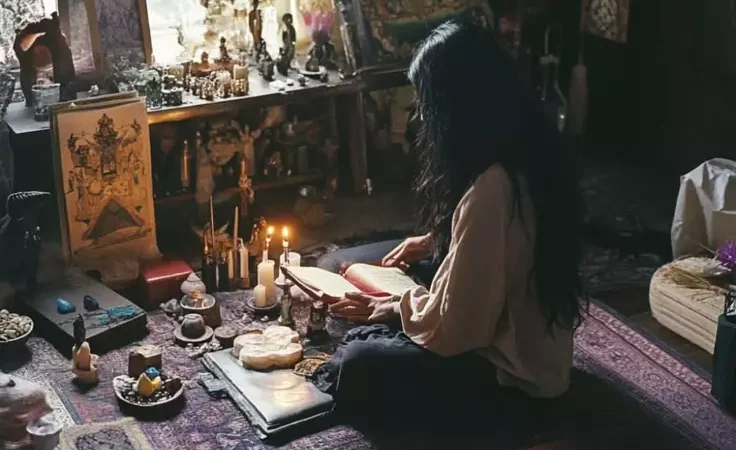
Despite the aesthetic images often seen online, you don’t need an elaborate altar or a collection of expensive tools.
In fact, many experienced practitioners recommend starting with just a few simple elements.
A journal
A journal is one of the most useful tools for beginner witches.
It allows you to:
- – record thoughts and intentions
- – track moon phases
- – write reflections after rituals
- – explore personal insights
Over time, this journal becomes a record of your spiritual growth.
A candle
Candles are often used in witchcraft because they symbolize focus and transformation.
Lighting a candle while setting an intention can create a simple but powerful moment of awareness.
The candle itself isn’t magical, the power comes from the intention behind the action.
A quiet space
You don’t need a dedicated altar to begin practicing witchcraft.
A small, quiet corner where you can sit, write, or reflect is more than enough.
What matters most is creating a space where you can slow down and become present.
Intention
The most important tool in witchcraft is something you already have: intention.
Your ability to focus your attention, reflect on your thoughts, and act with purpose is what gives rituals their meaning.
Everything else is optional.
5 Simple Witch Practices for Beginners
Once you understand the basics, the next step is experimenting with small practices that help you build awareness and intention.
Here are five beginner-friendly rituals that are simple but meaningful.
Morning intention ritual
At the beginning of the day, take a few quiet moments to set an intention.
You might ask yourself:
What kind of energy do I want to bring into today?
Lighting a candle or simply taking a few slow breaths can help anchor this intention.
Moon journaling
The moon’s phases provide natural moments for reflection.
During the new moon, many people focus on setting intentions for the coming weeks.
During the full moon, it can be helpful to reflect on what has unfolded and what might be ready to release.
Writing about these themes can deepen your self-awareness.
Herbal tea magic
Preparing tea can become a small daily ritual.
As you brew the tea, you might pause and focus on a calming intention, such as relaxation or clarity.
The act itself becomes a mindful moment rather than just a routine task.
Energy cleansing
Sometimes environments or emotions feel heavy.
Simple cleansing rituals can help reset your mental space.
This might involve:
- opening windows for fresh air
- lighting incense
- taking a shower while imagining stress washing away
These small actions help shift your mindset.
Nature grounding walk
Spending time outside is one of the most accessible magical practices.
A slow walk in a park or forest can help you reconnect with natural rhythms and calm your thoughts.
Even a few minutes of quiet observation can feel surprisingly powerful.
If you’re still exploring what kind of practice resonates with you, you might find it helpful to discover the different types of witches and the paths they follow (here).
Beginner Witch Mistakes to Avoid
When people first begin exploring witchcraft, it’s easy to feel overwhelmed by the amount of information available.
Avoiding a few common mistakes can make the experience much smoother.
Copying other witches
Social media often shows beautiful rituals and aesthetic altars.
While these images can be inspiring, it’s important to remember that witchcraft is a personal practice.
Your rituals do not need to look like anyone else’s.
Buying too many tools
Many beginners feel pressure to purchase crystals, candles, tarot decks, and other supplies immediately.
In reality, tools are optional.
It’s much better to develop your practice first and gradually add tools that genuinely feel meaningful.
Trying to learn everything at once
Witchcraft is a broad subject that includes many traditions and techniques.
Trying to learn everything quickly can become exhausting.
Instead, explore slowly and follow what feels interesting.
Ignoring your intuition
Perhaps the most important mistake to avoid is ignoring your own instincts.
If something feels meaningful or calming to you, it’s worth exploring further.
Your intuition is often one of the most valuable guides in magical practice.
Creating Your First Daily Witch Ritual
A daily ritual doesn’t need to be elaborate. In fact, simple routines often become the most sustainable practices.
Here is an example of a beginner-friendly daily witch routine.
Morning
Take a few minutes to breathe slowly and set a gentle intention for the day.
This might be something simple like:
“I will move through today with calm and awareness.”
If you like, you can light a candle or simply place your hand over your heart while focusing on the intention.
Evening
At the end of the day, take a few moments to reflect.
You might write in your journal:
- – What felt meaningful today?
- – What emotions came up?
- – What would I like to release before tomorrow?
This quiet reflection helps close the day with awareness.
Over time, these small rituals create a rhythm that supports mindfulness and personal growth.
Books That Help Beginner Witches
While personal exploration is important, books can provide helpful guidance when you’re first learning how to start witchcraft.
Some beginner-friendly topics to explore include:
- – modern witchcraft guides
- – green witchcraft and herbal traditions
- – moon rituals and lunar cycles
- – shadow work and self-reflection
When choosing books, look for authors who emphasize self-awareness, ethical practice, and personal exploration rather than rigid rules.
The best resources encourage curiosity rather than telling you exactly what your practice must look like.
If you’d like a softer, more guided way to begin, you can explore a curated reading list designed to gently introduce you to witchcraft, intuition, and personal practice.
Final Thoughts
Starting witchcraft, in many ways, simply begins with paying attention.
Paying attention to your thoughts.
To the rhythms of nature.
To the quiet moments that invite reflection.
The path of witchcraft is rarely something you master overnight. Instead, it unfolds slowly through curiosity, experimentation, and self-discovery.
If you feel drawn to it, that curiosity alone is enough to begin.
Because the real magic of witchcraft is not about performing perfect rituals.
It’s about learning to live with intention, awareness, and a deeper connection to the world around you